


Attorney
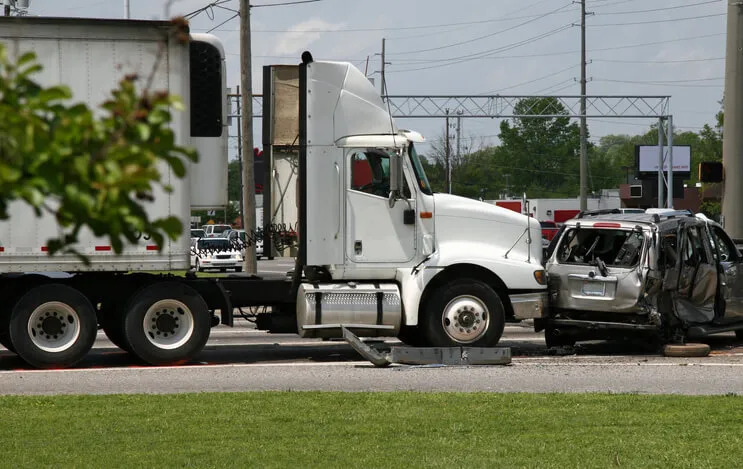
Truck accidents are often more complex than standard car accidents because multiple parties may be responsible for what happened.
Determining liability depends on how the crash occurred, who was involved, and whether any safety regulations were violated. In many cases, more than one party may share responsibility.
Common Parties That May Be Liable
Several different parties may be responsible in a truck accident.
Truck Driver
Drivers may be liable if they acted negligently, including:
- speeding or reckless driving
- distracted driving
- driving under the influence
- violating hours-of-service regulations
These actions are evaluated under what is considered negligence in personal injury cases.
Trucking Company
The company that employs or contracts the driver may also be liable.
Examples include:
- failure to properly train drivers
- unsafe scheduling that encourages fatigue
- poor hiring practices
- failure to maintain vehicles
In many cases, companies are responsible for the actions of their drivers while they are working.
Cargo Loaders
Improperly loaded cargo can cause serious accidents.
Liability may arise if:
- cargo is overloaded
- weight is unevenly distributed
- cargo shifts during transport
Vehicle or Parts Manufacturers
If a mechanical failure contributed to the crash, the manufacturer may be responsible.
Examples include:
- brake failure
- tire defects
- steering system issues
Maintenance Providers
Third-party maintenance companies may be liable if they failed to properly inspect or repair the truck.
Liability Breakdown by Scenario
| Scenario | Potentially Liable Party |
|---|---|
| Driver falls asleep at the wheel | Truck driver, trucking company |
| Truck overloaded or unbalanced | Cargo loading company |
| Brake failure causes crash | Manufacturer or maintenance provider |
| Driver violates safety regulations | Truck driver, trucking company |
How Liability Is Proven
To establish liability, a claim must show that a party acted negligently and caused the accident.
This typically involves proving:
- a duty of care existed
- that duty was violated
- the violation caused the crash
- damages resulted from the accident
These elements are used to determine what is considered negligence and whether a party is legally responsible.
The Role of Evidence in Truck Accident Cases
Truck accident claims often rely on detailed evidence.
This may include:
- driver logs and hours-of-service records
- black box data from the truck
- maintenance and inspection records
- dashcam or traffic camera footage
- witness statements
Because trucking companies are often involved, evidence may need to be preserved quickly.
Shared Fault and Contributory Negligence
In Washington DC, Maryland, and Virginia, liability is affected by contributory negligence rules.
If an injured person is found to be even slightly at fault, they may be prevented from recovering compensation.
This makes liability disputes especially important in these jurisdictions.
How Liability Applies in DC, Maryland, and Virginia
Truck accident claims are handled under state-specific laws, which can affect how fault is evaluated and how compensation is recovered.
For example, a claim may fall under Washington DC truck accident law if the crash occurred in the District or if jurisdiction applies based on the facts of the case. Similar legal frameworks apply to Maryland truck accident claims and Virginia truck accident claims, each with their own procedural rules and considerations.
Because these cases often involve interstate travel, determining where and how a claim is filed can be just as important as identifying who is liable.
Why Liability Matters for Your Claim
Identifying who is responsible determines:
- who pays for damages
- how much compensation may be available
- whether multiple insurance policies apply
Truck accident cases often involve higher insurance limits and more complex claims than typical car accidents.
Understanding how liability is determined is an important step when evaluating a truck accident claim in Washington DC, Maryland, or Virginia, especially when fault is disputed or multiple parties are involved.
Talk to an Attorney About Your Truck Accident Claim
If you were injured in a truck accident, determining who is liable is one of the most important parts of your case. These claims often involve multiple parties, complex evidence, and strict legal rules that can affect your ability to recover compensation. Speaking with an experienced truck accident attorney early can help protect your rights and ensure your claim is evaluated correctly. You can contact our team to discuss your situation and understand your options.